Sag Harbor’s Main Street Effect: How Proximity to the Village Center Is Rewriting Price Per Square Foot
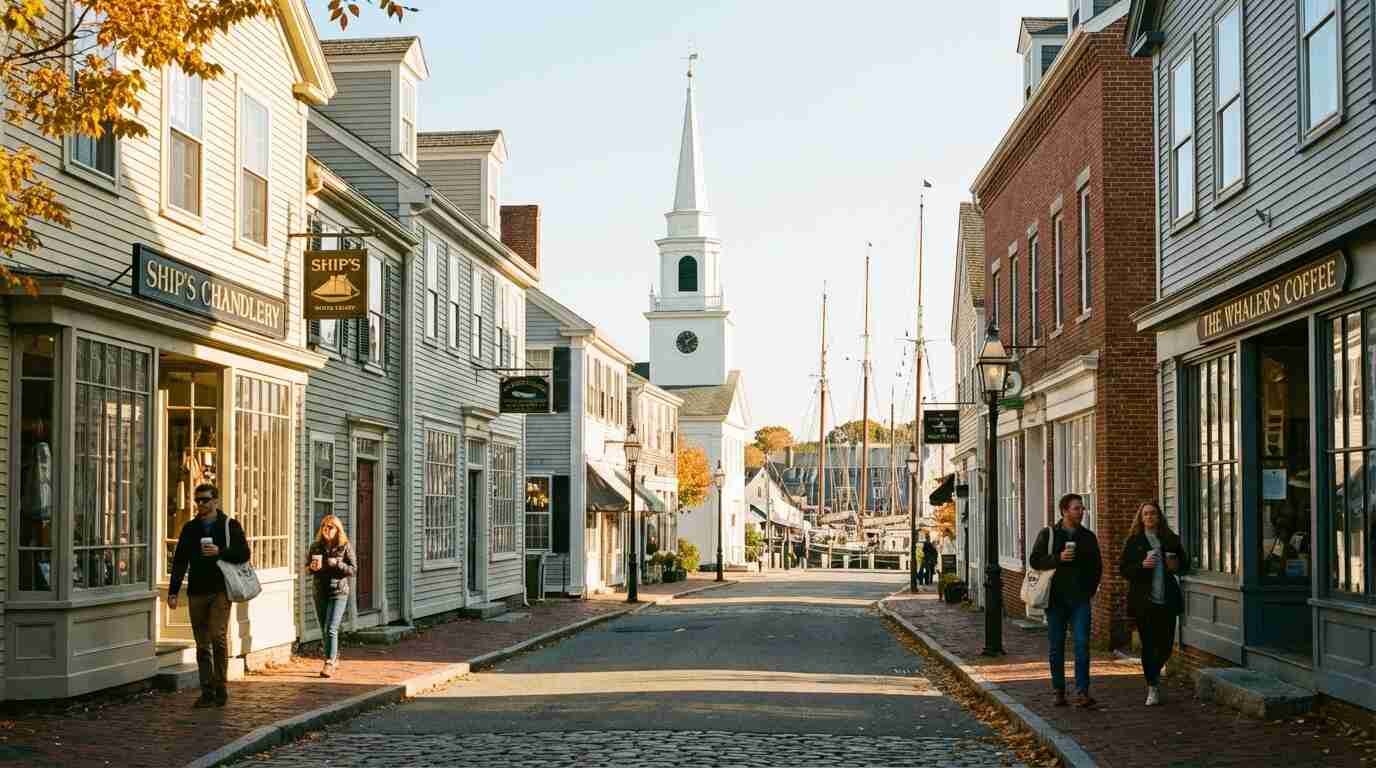
There’s a house on Church Street in Sag Harbor Village that I keep thinking about. Not because of what it sold for — though the number was serious — but because of why. It had nothing extraordinary about the structure itself. The architecture was handsome but not exceptional. The lot was a reasonable size but not large. What it had was location: two blocks from Bay Street Theater, three blocks from the Whaling Museum, four from the pier. Everything walkable, everything there. The buyer, I was told, had looked at oceanfront properties with more land and views and more of everything that traditionally commands a premium in the Hamptons. And chose this instead.
That story, repeated with small variations across Bay Street, Division Street, and Hampton Street over the past three years, is the Main Street Effect — and the data has caught up to what buyers were telling us with their offers all along.
The Number That Changed the Conversation
In September 2024, PropertyShark published data that real estate professionals on the East End had been sensing but hadn’t seen so clearly stated: Sag Harbor’s median sale price per square foot reached $1,005 — placing it second only to Manhattan’s $1,310 per square foot among 240 communities in the metro New York area.
To put that in context: the metro area median is $441 per square foot, while the Federal Reserve Bank’s national median listing price per square foot is $228. Sag Harbor is pricing at more than four times the national median. In a market where oceanfront Bridgehampton had long been considered the aspirational ceiling, a walkable whaling village has climbed to within striking distance of Manhattan. The methodology is sound — PropertyShark analyzed median sale prices rather than averages, specifically to remove outlier distortion, and only included communities with at least 100 annual sales between 2020 and 2024.
This is not a footnote in the Hamptons market story. This is a structural shift in what buyers are paying for.
What Walkability Actually Buys in This Market
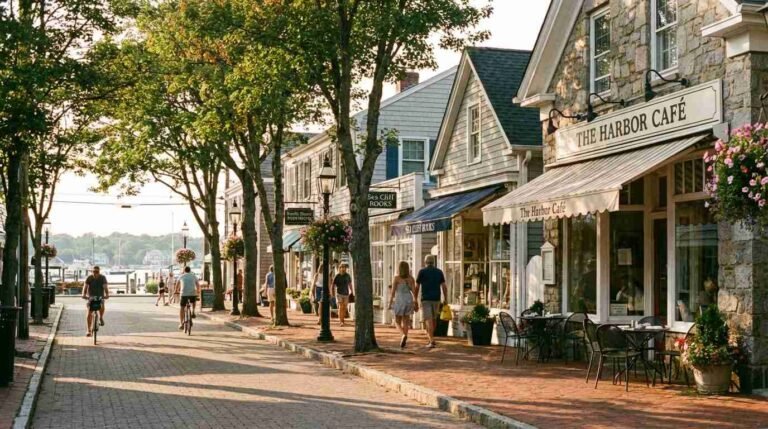
The Hamptons has always sold access — to the ocean, to exclusivity, to a version of summer that comes with a mythology. What Sag Harbor has done differently is to offer access to something the ocean towns couldn’t: a living, breathing village that works year-round. No boarded-up storefronts from November to May. No towns that feel like movie sets between seasons.
The Bay Street Theater has productions running into fall. The Sag Harbor Cinema — a community institution that spent years fighting for its resurrection and opened its restored screen in recent years — anchors the arts calendar. The American Hotel bar has served as a literary salon since the 1980s, hosting writers who have included John Steinbeck, who lived here and wrote The Winter of Our Discontent on the block. That’s not real estate copy. That’s the actual history of the building you’re walking past on a Tuesday afternoon in January.
Lulu Kitchen & Bar has consistently drawn Manhattan food media attention. The independent booksellers, the bakeries, the marine supply stores that have somehow survived gentrification pressure — these are not amenities that can be replicated. They are the product of a village that organized its economy around permanence rather than seasonality, and buyers have started paying the premium that permanence commands.
As one analysis of the market put it: Sag Harbor has become a year-round community, a second home destination, and a cultural center all at once — a village with something the other Hamptons towns don’t have in quite the same way: a living, breathing presence that doesn’t disappear after Labor Day.
The Streets Where the Premium Is Sharpest
Not all of Sag Harbor’s walkability premium is equal. There is a radius effect — the closer to Main Street and Bay Street, the sharper the pricing, and it falls off as you move into the surrounding neighborhoods.
Bay Street and its immediate cross streets — Church, Division, Hampton — represent the innermost ring. Properties here price at a significant premium to the Sag Harbor median. The buyer is often a full-time resident or a second-home buyer who plans to use the property heavily across seasons, not just in summer. They are paying for the walk to the theater, the ability to leave a car behind entirely.
Captain’s Row and the historic core along Main Street trade on architectural pedigree layered on top of walkability. Historic homes here — Federal, Greek Revival, Italianate — have sold well above $5 million in recent transaction cycles, with the most significant landmarked properties moving higher. A late 18th-century Main Street estate sold in October 2025 for $16.25 million to a Miami-based luxury developer who cited the historic integrity of the structure as the primary draw.
The streets between the village center and Sag Harbor Bay — the working marina, the yacht clubs, the pier — represent a third premium tier: walkability to the water layered on walkability to the village. Village homes that are renovated and within walking distance to Main Street often fall between $3.5 and $6 million, with historic cottages reaching higher depending on size and street.
Buyers who came to the Hamptons looking for oceanfront in Southampton and Bridgehampton and instead found themselves on a Sag Harbor side street two blocks from Bay Street understand, once they walk it, why the numbers look the way they do.
The “UnHamptons” Premium
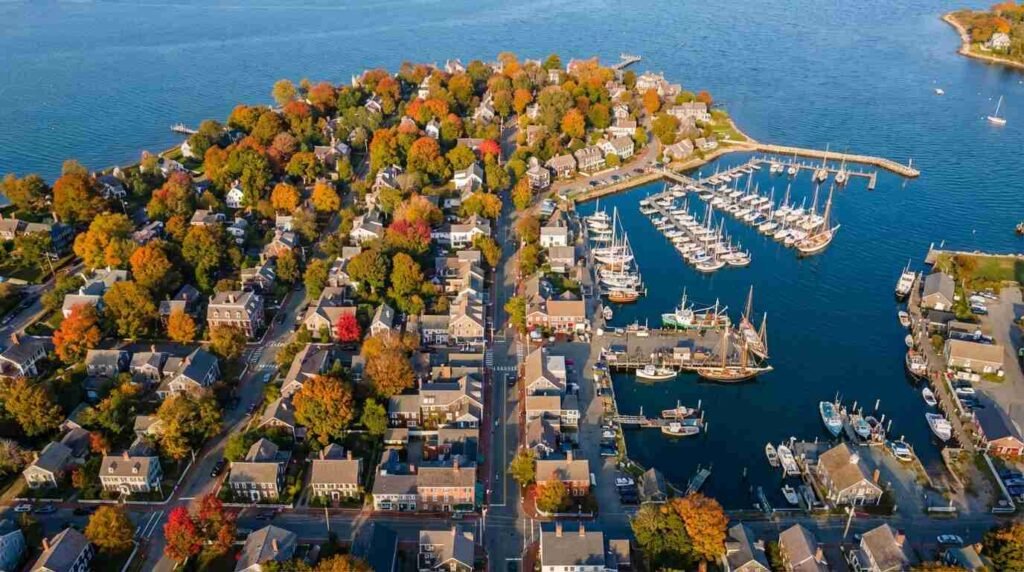
Sag Harbor earned the nickname that has stuck: the UnHamptons. It was originally meant as gentle ribbing — the place without the hedges and the gate codes and the ostentatious scale. It has become something more interesting: a brand.
The buyers who have driven Sag Harbor’s price-per-square-foot into the stratosphere are not settling for something smaller. They are buying something specific. The village’s physical constraints — its 2.3 square miles, its historic district preservation, its landmarked streetscape — mean that you cannot replicate what exists here. You cannot build your way into supply. What’s here is what will always be here, more or less, and the market has priced the scarcity accordingly.
What This Means for Buyers and Sellers Now
For buyers: the Sag Harbor premium is real and documented. If you are comparing a Sag Harbor village home at $1,000 per square foot to a Water Mill compound at $600 per square foot, you are not comparing equivalent assets. You are comparing a specific kind of life — one where a property’s location in a walkable, year-round cultural center commands a premium that is unlikely to compress over time. The structural drivers — scarcity, preservation, desirability — are durable.
For sellers: the market is doing the argument for you, but only if your property is genuinely in the walkable core. A Sag Harbor Hills home that requires a car for every errand is a beautiful property in a beautiful setting — it is not benefiting from the Main Street Effect in the same way a Church Street cottage does. Pricing requires granularity.
I work with buyers and sellers across the East End, and the story Sag Harbor is telling right now is one I expect to continue. The village figured out what buyers were moving toward before the data caught up — and the data, as of 2024, has caught up decisively.
Real estate markets change. For current listings and market data, contact Pawli at Maison Pawli.
This is for informational purposes only — consult a licensed attorney or financial advisor for your specific situation.
Sources
- PropertyShark Median Sale Price Per Square Foot Study, 240 Communities, August 2023–August 2024, via 27East: 27east.com
- Hamptons.com — Sag Harbor’s Five-Year Real Estate Transformation: hamptons.com
- NeighborhoodScout — Sag Harbor Real Estate Data: neighborhoodscout.com
- Francis York — Historic Sag Harbor Estate / October 2025 transaction: francisyork.com