Riven or Sawn: The Chestnut Question in the Fire Island Life-Saving Stations and What the Planks Remember
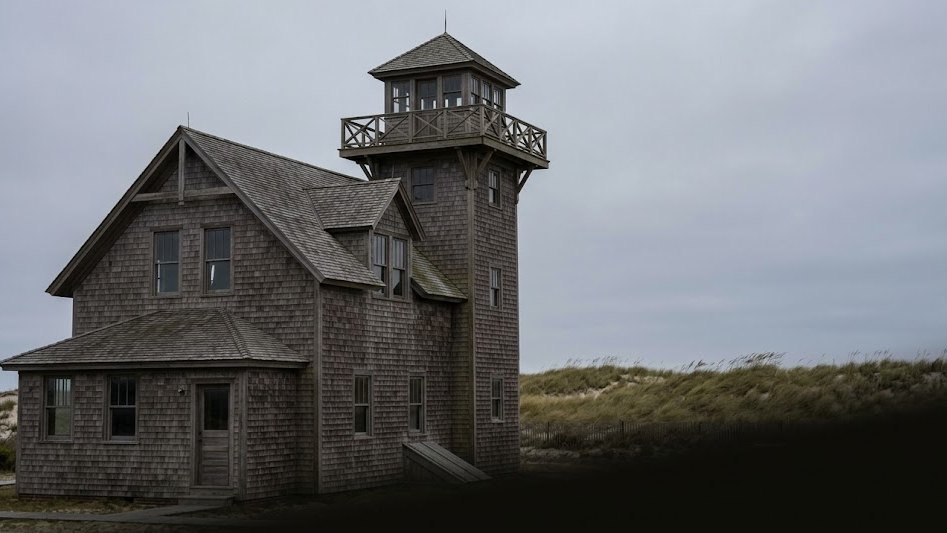
Walk into one of the preserved Life-Saving Service stations on Fire Island National Seashore and the first thing the building teaches you is patience. The ceilings are low, the rooms functional to the point of severity — a place built to shelter men who needed to be ready at any hour to run surfboats into the North Atlantic in a storm. What it was not built to be was beautiful. And yet it is. Partly because of age, partly because of the specific character of the material used in its construction: American chestnut.
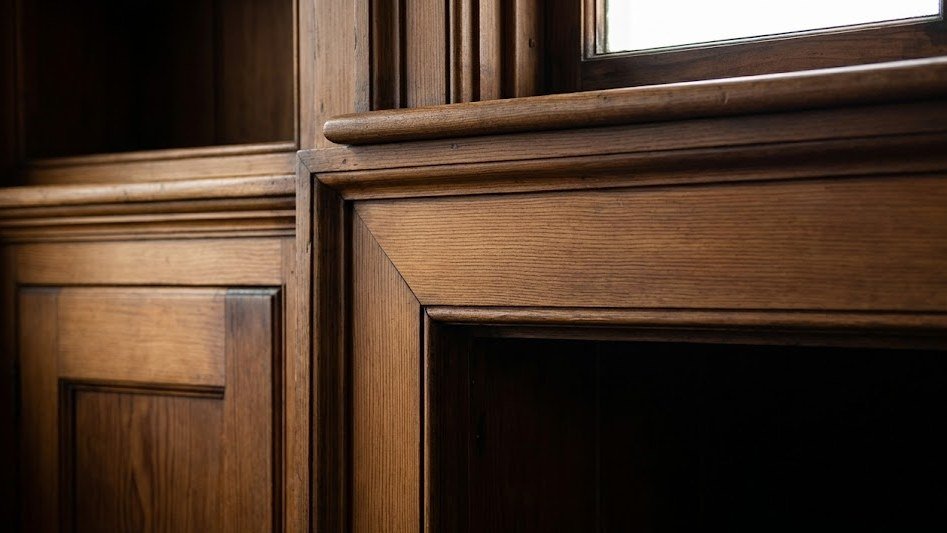
Castanea dentata — before the blight arrived — was among the great working woods of the American northeast. Open any record of 19th-century domestic construction east of the Appalachians and you will find it everywhere: framing timber, flooring, furniture, door casings, interior millwork, roofing shingles. It was the species that did everything. Carpenters valued it for its straight grain, its moderate weight, its willingness to be worked with hand tools, and — crucially — its natural resistance to rot. Where oak and elm were the timbers of strength, chestnut was the timber of durability. A fence rail of chestnut would outlast the man who cut it.
The stations on Fire Island were built during the period when chestnut was still in full supply. The Life-Saving Benevolent Association first established stations on Long Island’s south barrier chain in the mid-19th century; after 1871, when Congress organized the network into the United States Life-Saving Service, those structures were rebuilt, expanded, and standardized. By the time the most significant Fire Island stations were standing in their mature form — Lone Hill, Fire Island, Point O’Woods, among others — the chestnut forests of the northeastern United States were still intact and the timber trade that fed Long Island’s construction industry drew from them heavily.
The blight came ashore in 1904, imported in nursery stock from Asia. Cryphonectria parasitica, a bark fungus, moved through the chestnut range at the rate of approximately fifty miles per year. By 1940, three to four billion trees were dead. The species was not technically extinct — the root systems survived, still sending up shoots — but as a working timber tree, as a force in American forests and the lumber market, it was gone. What the builders of the Fire Island stations used was, in other words, an unrepeatable material. The planks in the floors and the frames around the doors and the built-in furniture of those stations were milled from trees that no living woodworker has ever worked green from a standing trunk.
The Processing Question
This is where the matter becomes specifically interesting to anyone who has spent time thinking about how wood behaves over decades and centuries, and why some pieces survive conditions that should have destroyed them.
When timber is split — riven, in the traditional term — along the natural grain of the wood rather than cut across it by a saw, the fibers remain continuous and uninterrupted. A riven board is not a board in the modern sense; it is a section of the tree’s own structure, expressing its full longitudinal integrity. The saw ignores the path of the grain entirely. It cuts straight through the log, interrupting fibers, exposing end grain throughout the face of the board, and creating what woodworkers call runout: places where the grain runs to the surface and is cut short. Runout creates pathways for moisture, for fungal spore, for the movement that eventually leads to failure in an exposed environment.
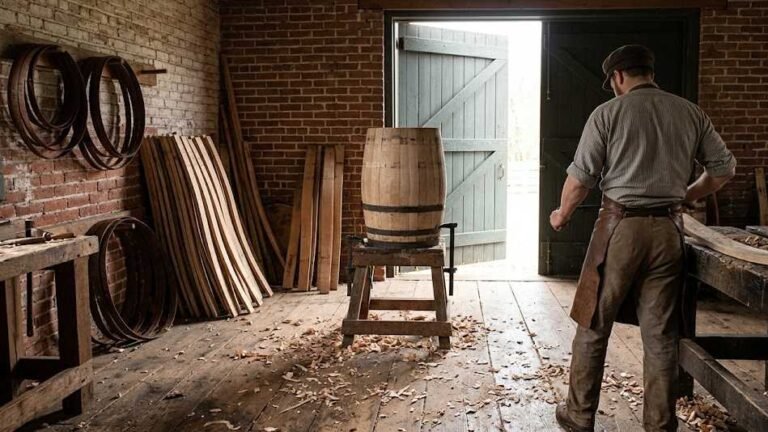
A riven plank of oak was estimated by period timber framers to be as strong as a sawn plank of twice the thickness. For chestnut, which possesses a relatively straight, cooperative grain that splits with less difficulty than oak, the riving was achievable at volume by skilled workers using froes and maulls. It was the traditional processing method for much pre-industrial timber work in the northeastern United States. It was also slow, wasteful of wood, and dependent on hand skill. As industrial sawmills expanded their reach through the second half of the 19th century, riven timber became increasingly rare outside of specific applications — shingles, shakes, fence rails — where the grain-following split was understood to confer a clear advantage.
The stations on Fire Island were built at the precise historical moment when this transition was occurring. Whether the chestnut used in their construction was riven or sawn is not merely a historical curiosity. In a salt-air environment, on a barrier island where the wind drives moisture horizontally through every gap in a building’s exterior, the grain integrity of the material used for interior elements — door casings, built-in storage, flooring over a damp crawlspace — would have made a measurable difference to how long those elements survived.
What the Grain Says
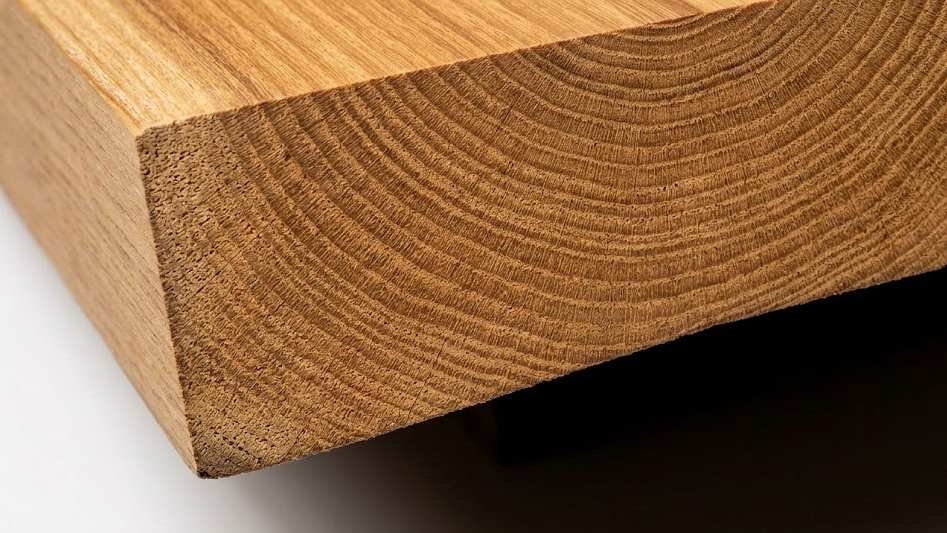
The way to read this question is in the end grain of surviving pieces. A riven section of chestnut, examined at its cut end, shows growth rings running closely parallel to the face of the board — a result of the split following the grain radially from the center of the tree. A sawn section, cut tangentially off a log, shows rings that angle across the face. The two produce different behavior under moisture stress: the riven piece expands and contracts predictably, following the orientation of the rings; the tangentially sawn piece cups, checks, and moves across its face in response to seasonal variation in relative humidity.
American chestnut’s naturally high tannin content — it belongs to the same family as oak, Fagaceae — gave it inherent resistance to decay organisms, even in conditions that would rapidly degrade most temperate hardwoods. That tannin content is also part of why surviving pre-blight chestnut, pulled from old structures, remains identifiable and workable today. The tannins did not expire with the tree.
American chestnut lumber can be distinguished as pre- or post-blight by analysis of worm tracks in sawn timber. The presence of worm tracks suggests the trees were felled as dead standing timber. The chestnut in the Fire Island stations, built before the blight had progressed down the Atlantic seaboard, should be clean of those tracks — a form of material evidence that remains legible more than a century after the wood was cut.
What the NPS Historic Structure Reports for the surviving stations document is the extent to which the original chestnut fabric persists. Interior door casings, the framing around built-in storage lockers, sections of flooring in rooms that were not subject to repeated flooding — these are the elements most likely to have survived in a form that still reveals their processing. A plank that has remained relatively stable through a hundred and forty years of barrier island climate, with its face unchecked and its joints tight, is a plank that was either exceptionally well-detailed against moisture ingress, or was riven well enough that its grain structure gave it the resilience to tolerate what came through anyway.
The Blight as Material Loss
The American Chestnut Foundation has documented, in the decades since its 1983 founding, the scale of what the blight removed from American material culture. The species accounted for as much as one in four trees in the forests of the eastern United States before Cryphonectria parasitica arrived. It was not merely an ecological loss — it was a loss of a specific working material with properties that have not been replaced by any other species in identical combination: the rot resistance of black locust, without the density and difficulty; the workability of cherry, without the sapwood instability; the availability and scale of white oak, without the weight.
For the craftsman looking at surviving chestnut today — whether in a barrel stave pulled from a 19th-century winery or a door casing in a Fire Island National Seashore structure — the material represents a form of pre-industrial abundance that is essentially non-reproducible. Virtually all chestnut available now is salvaged from old barn beams and other structures, and the vast majority of this material shows insect damage from the years after the blight. The clean, pre-blight chestnut in the Life-Saving stations — if its integrity has been preserved — is among the more remarkable surviving examples of the wood in its original working condition.
Why the Processing Still Matters
The question of riven versus sawn is not, ultimately, antiquarian. It is a question that has direct implications for the preservation work ongoing at Fire Island National Seashore, where decisions about how to treat, consolidate, and where necessary replace historic material require an understanding of what that material was and why it has survived the way it has.
If the surviving chestnut elements were riven — and the end grain of the pieces, where accessible, would confirm this — then their durability is not primarily a function of the species alone but of the species combined with a processing method that kept the wood’s own structural logic intact. Replacing failed sections with sawn chestnut, even reclaimed sawn chestnut of appropriate age, would not produce equivalent performance. The fibers would be interrupted. The grain would not follow.
Riven boards have their rays running almost exactly on the faces of the board, making them the most stable of all milling orientations — and in addition, the easiest to work, since there is little or no disturbance in the fibers. That stability, in a salt-air environment where relative humidity swings seasonally from near saturation to very dry, is not a secondary consideration. It is the reason a door casing cut from a riven chestnut plank in 1885 might still be holding its joints and its profile today, while a sawn plank of comparable species milled the same year might have checked itself apart three decades ago.
The Life-Saving stations of Fire Island were built to save lives. They did. And the wood from which they were built — chestnut chosen for its durability, processed in a tradition that predated the industrial sawmill, installed by craftsmen who understood the relationship between grain and longevity — has outlasted the species that produced it. The blight killed the trees. It did not kill what the trees remembered.
Sources
- Fire Island National Seashore, U.S. National Park Service: nps.gov/fiis
- The Wood Database — American Chestnut: wood-database.com
- Reclaimed Lumber, Wikipedia: wikipedia.org
- Hearne Hardwoods — American Chestnut: hearnehardwoods.com
- Peter Follansbee, “There’s Oak, Then There’s Riven Oak”: pfollansbee.wordpress.com
- Fine Woodworking, “Understanding Wood Grain”: finewoodworking.com
- Traditional Timber Framing, University of the West of England: fet.uwe.ac.uk
- American Chestnut Foundation: acf.org