Oyster Bay’s ‘Forgotten Elevator’: The Pneumatic Tube System That Was Supposed to Connect Gold Coast Estates to the LIRR
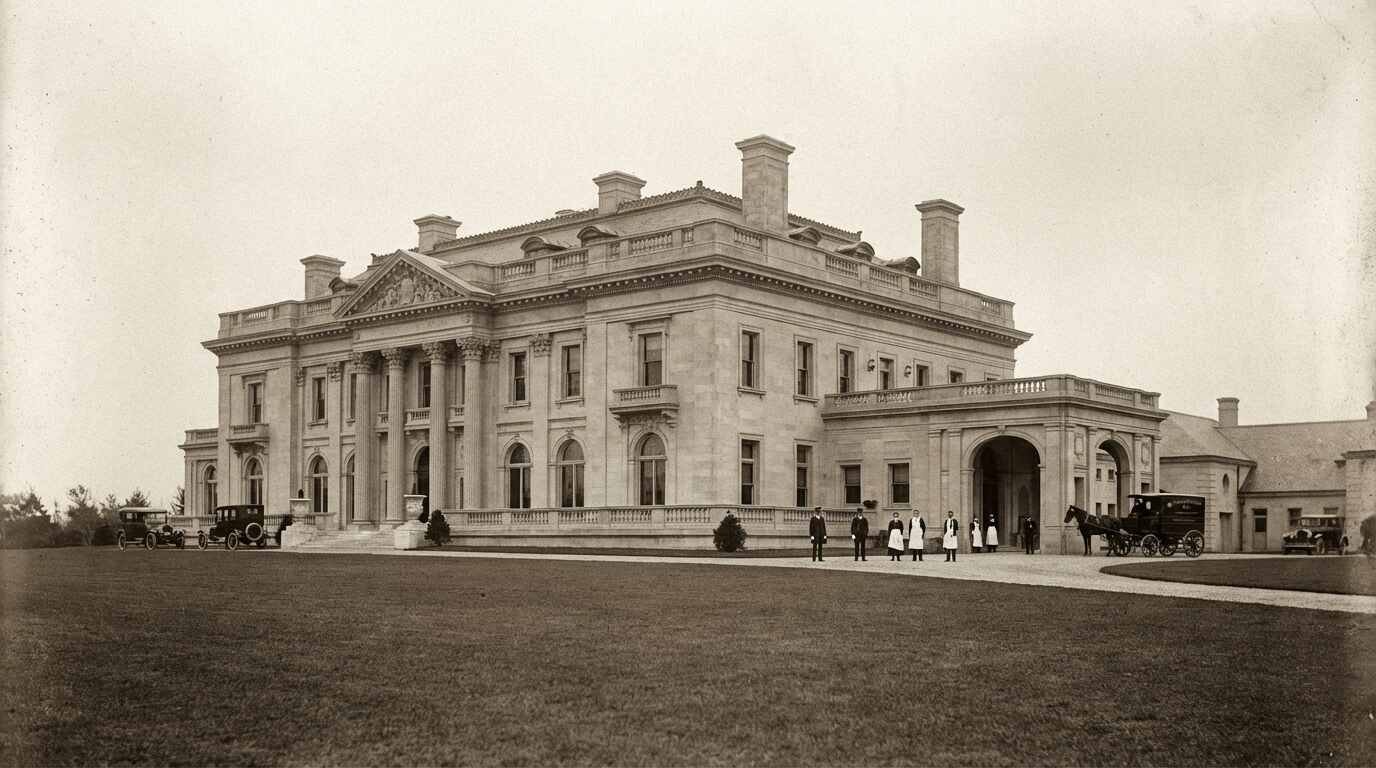
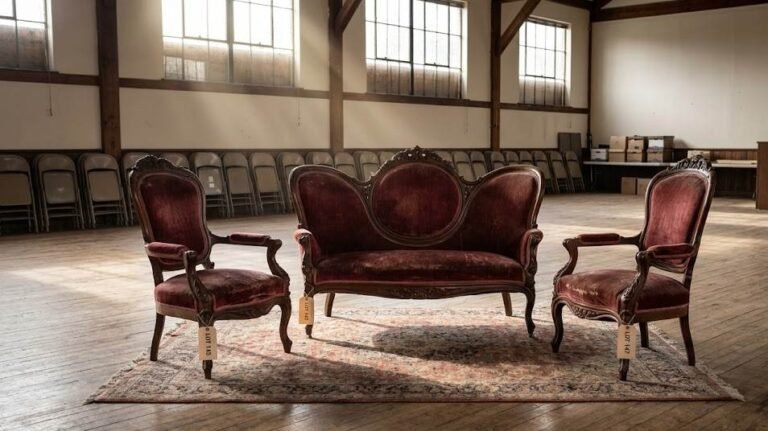
The Gilded Age estates of Oyster Bay left behind a particular kind of archive. There are the houses themselves — the ones that survived, anyway — and the photographs in linen albums, and the guest lists in society columns. There is the furniture, some of it dispersed at auction, some of it still in rooms that have been converted to conference centers or classrooms or small museums with laminated placards. What is harder to find, and more interesting to look for, is the infrastructure that kept it all running.
I spend a fair amount of time in the historical record for professional reasons — understanding how a community was built, how its supply chains worked, what its service corridors looked like, tells you things about the land that no listing description ever will. So when I first encountered a reference to a 1909 proposal for a freight pneumatic tube network connecting Oyster Bay’s Gold Coast estates to the Long Island Rail Road station, I went looking for the full story. What I found was less a story about technology than a story about labor — specifically, the enormous, largely invisible workforce that made the apparent ease of Gold Coast life possible.
The Proposal
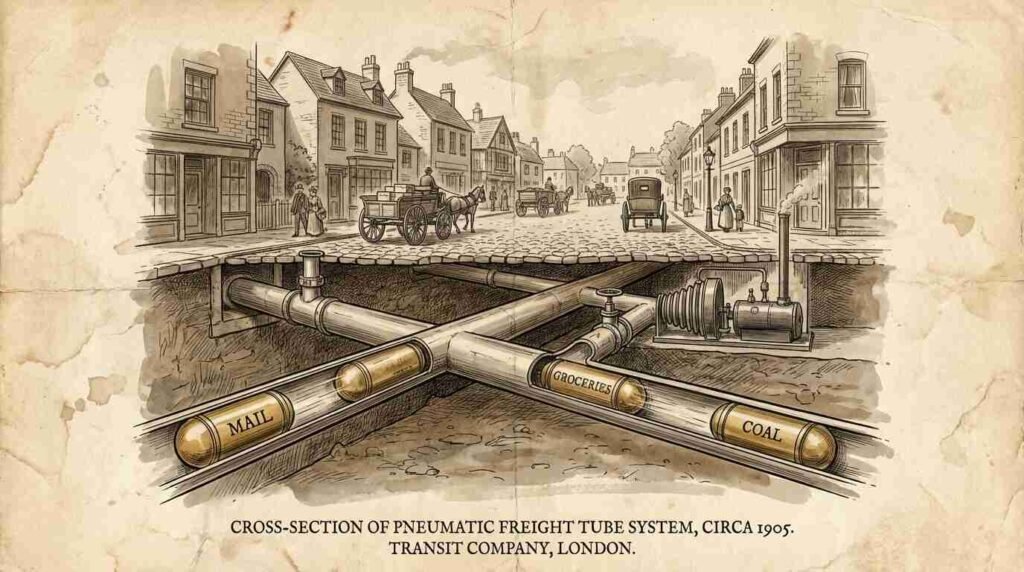
In the winter of 1909, according to minutes of the Nassau County Board of Supervisors held at the Nassau County Museum, a county engineer presented a preliminary study for a pneumatic freight conveyance system. The concept was not new — pneumatic tube networks had been successfully operating in several American cities since the 1870s, most famously in New York City, where the pneumatic mail system ran beneath Manhattan for decades. The Long Island proposal was more modest in scope but more ambitious in its specific application: a network of tubes, installed below grade, that would move freight — groceries, dry goods, coal deliveries, ice, post — from the Oyster Bay station depot to a series of estate service entrances along the ridge roads north of the village.
The proposal drew interest from at least two estate managers, according to period accounts in the Oyster Bay Guardian, then available through the Library of Congress Chronicling America archive. The logistics problem it was meant to solve was genuine: the Gold Coast estates were serviced by a daily supply chain of extraordinary complexity, and the last mile of that chain — the actual delivery of goods from the railroad to the estate kitchens, coal cellars, and service wings — was slow, weather-dependent, and labor-intensive in ways that estate managers found consistently frustrating.
The proposal was never funded. By 1912, the Board of Supervisors had turned its attention elsewhere, and the pneumatic tube network exists only in the fragmentary record — meeting minutes, a brief notice in the Guardian, a single reference in estate supply correspondence held at the Raynham Hall Museum in Oyster Bay. But the proposal, precisely because it was never built, functions as an accidental document of the system it was meant to improve.
The Logistics Behind the Lawns
To understand why anyone proposed a pneumatic tube freight network on the North Shore of Long Island, you need to understand how a Gold Coast estate actually operated as a supply system.
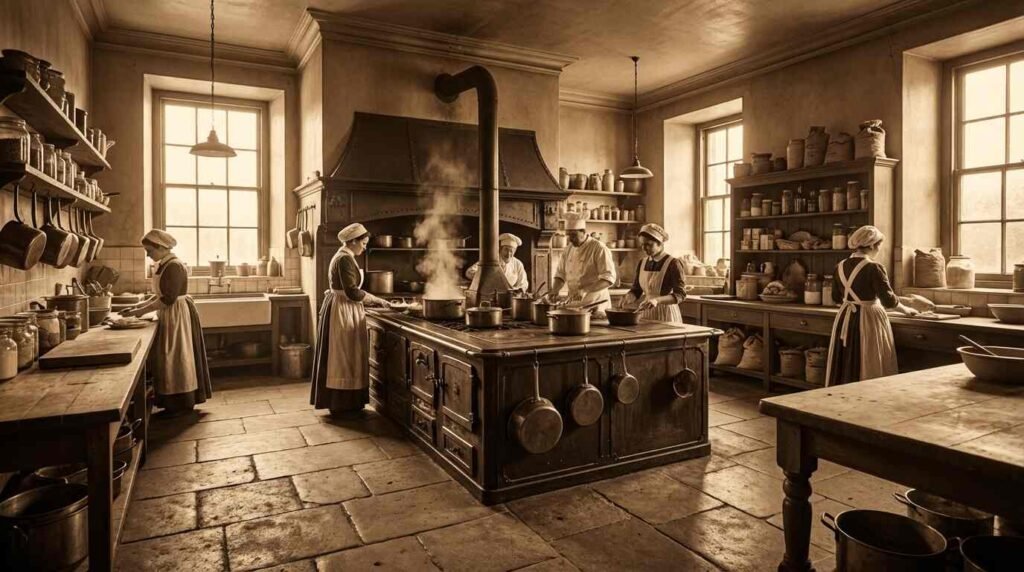
The Roosevelt, Whitney, and Pratt estates — along with dozens of others clustered in the Oyster Bay and Cold Spring Harbor corridor — were not self-sufficient in any meaningful sense. They were enormous consumers of goods that arrived by rail from New York City and beyond: fresh produce, butchered meats, dairy, cut flowers, wine and spirits, hardware, coal, ice, linens, and an endless rotation of dry goods. The Planting Fields Arboretum State Historic Park archives, which document the Coe estate at Oyster Bay Cove, provide a partial picture of the supply volumes involved: deliveries arriving multiple times per week, some daily in summer, coordinating with a domestic staff that might run to thirty or forty people in the high season.
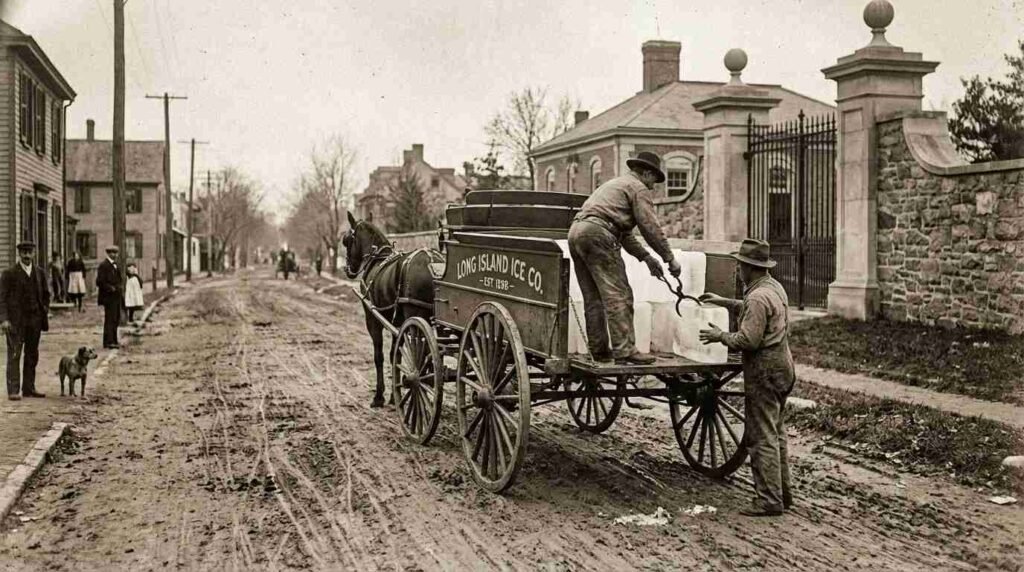
That staff included a hierarchy invisible in most historical accounts of the Gold Coast. At the estates themselves: cooks, kitchen maids, laundry workers, housemaids, footmen, lady’s maids, valets, gardeners, stablemen, chauffeurs, groundskeepers. And then the off-estate workers who serviced the service chain: the ice depot workers who loaded delivery wagons in the village, the coal yard workers who managed the estate fuel supply, the station porters who handled freight transfer from the LIRR platform, the teamsters who drove the wagons up the ridge roads. These workers did not appear in the society columns. Many do not appear in the historical record at all except as line items in estate account books — “wagon hire,” “station cartage,” “ice delivery.”
The Raynham Hall Museum in Oyster Bay preserves estate supply records that document this infrastructure with unusual specificity. What emerges from those records is a picture of a community within a community: a service economy operating in parallel to the visible social life of the estates, connected to it by the back roads, the service entrances, and the delivery routes that the estate maps always showed clearly but the narrative accounts rarely described.
Ice, Coal, and the Real Map of Oyster Bay
There were, in the first decade of the twentieth century, at least three significant ice storage depots operating in the Oyster Bay township area, servicing the estate trade. Ice was not a luxury — before mechanical refrigeration reached domestic use, large-scale ice delivery was essential to any kitchen operating at estate scale. The ice came from northern ponds in winter, was stored in sawdust-insulated sheds, and was delivered by wagon through the summer months.
The coal infrastructure was equally significant. Most of the Gold Coast estates used coal-fired heating systems by 1900, and the quantities involved were substantial — a large estate might burn hundreds of tons in a single winter. The coal arrived at the Oyster Bay station by rail, was transferred to wagons, and was driven to estate coal cellars through a network of service roads that followed different routes than the carriage approaches shown on the estate maps.
This is the geography the pneumatic tube proposal was embedded in — not the manicured front approaches of the estates, but the service corridors, the delivery routes, the ice depots and coal yards and station freight platforms that constituted the actual supply chain of Gold Coast life. The Columbia University Avery Index documents several early pneumatic transit proposals for American cities from this period, providing useful context for the Long Island study. What distinguished the Oyster Bay proposal from urban pneumatic systems was its explicitly estate-service orientation — designed not for public mail or urban freight generally, but for the specific, concentrated demand of a cluster of very large private households.
The Workers the System Would Have Replaced
Here is where the history becomes complicated in a way that the 1909 proposal probably did not acknowledge. The teamsters and station workers and ice depot employees who constituted the delivery chain were not incidental to the economy of Oyster Bay village — they were part of its fabric. Many of them lived in the village itself, in the blocks behind the waterfront, in the boarding houses near the station. Their wages circulated in the local economy. The hardware store served them. The saloons served them. The churches served them.
A pneumatic tube freight system, had it been built, would have directly displaced the employment of a significant number of these workers. The estate managers who expressed interest in the proposal were interested precisely because it would reduce their cartage costs — which is to say, reduce the wages they paid to the people moving goods from the station to the service entrance.
This is not a novel observation about technology and labor displacement, but it is an observation worth making in the specific case of the Gold Coast estates, because the historical memory of that world tends to preserve the estates themselves — the architecture, the furniture, the family names — while losing the service economy that made them possible. The pneumatic tube proposal, in its failure, preserved a snapshot of that service economy at the moment when it was first being considered for elimination.
What the Record Leaves Behind
I find myself thinking about the Oyster Bay pneumatic tube proposal the way I sometimes think about an old foundation line in a back yard — evidence of a structure that didn’t survive, but that tells you something important about how the land was used and who used it.
The Gold Coast estates are in various states now: some preserved, some converted, some subdivided into the residential neighborhoods that constitute a significant portion of the high-end inventory I work with on the North Shore. When I walk a property that was once part of a larger estate — and there are more of them than buyers typically realize — I try to hold the whole picture: the front rooms and the back rooms, the carriage house and the coal cellar, the service drive and the main approach. The architecture of a Gold Coast property is always partly the architecture of its service infrastructure, and the service infrastructure is always partly the architecture of the labor that maintained it.
The proposal that was never built, the tubes that were never installed, the workers who were never replaced — they are part of that history too. Not the glamorous part. But the part that, once you start looking for it, turns out to be everywhere.
Real estate markets change. For current listings and market data, contact Pawli at Maison Pawli.
You Might Also Like:
- The Servant Stair and the Service Wing: What the Hidden Architecture of Gold Coast Estates Reveals About Today’s Luxury Floor Plans
- The Underbidder’s Notebook: What the Handwritten Auction Records of a Huntington Antiques Dealer Reveal About Who Was Actually Buying Gold Coast Furniture Between 1955 and 1975
- Oheka Castle and the Architecture of Reinvention
Sources:
- Nassau County Board of Supervisors minutes, 1908–1912. Nassau County Museum research library, Roslyn Harbor, NY.
- Raynham Hall Museum estate supply records, Oyster Bay, NY. https://raynhamhallmuseum.org
- Planting Fields Arboretum State Historic Park archive, Oyster Bay Cove, NY. https://plantingfields.org
- Oyster Bay Guardian, 1908–1912. Library of Congress Chronicling America. https://chroniclingamerica.loc.gov
- Columbia University Avery Index to Architectural Periodicals. https://library.columbia.edu/libraries/avery.html
- New York City pneumatic mail system: U.S. Postal Service historical records.