The Ghost Appraiser Problem: How FHA’s Reactive Oversight Structure Can Leave Long Island First-Time Buyers Overpaying — and What the Public Record Shows
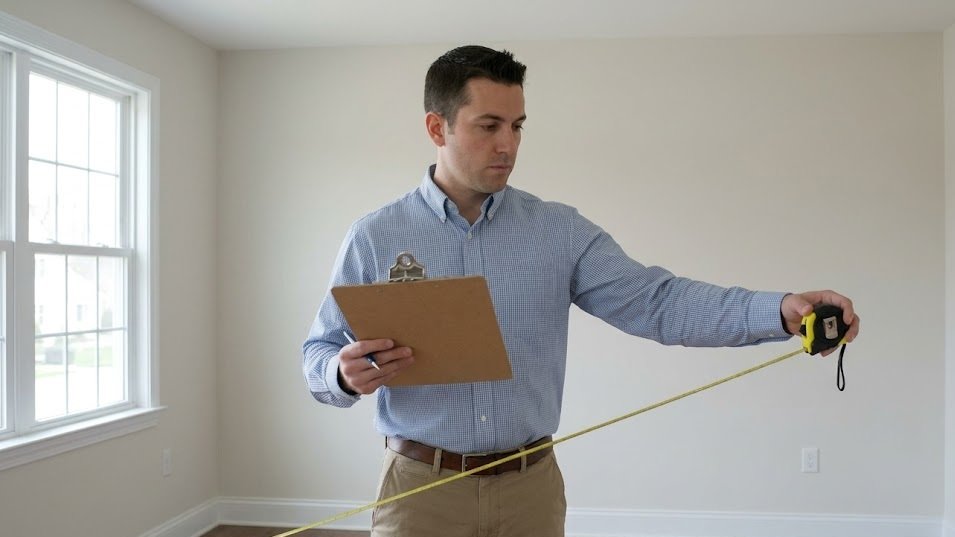
There is a piece of paper that sits at the center of every FHA-insured mortgage transaction, and most buyers who sign at the closing table have never read it carefully. It is the appraisal report — the document that tells the federal government, the lender, and technically the buyer what the property is worth as a condition of insuring the loan. It is the figure that sets the ceiling on the loan amount. It is the number that determines whether the buyer is, on the day they close, buying a house at fair value or buying a house at a price that the market will eventually correct toward, with the buyer absorbing the difference.
Most appraisals on Long Island are competent, honest, and defensible. Most appraisers on HUD’s FHA roster are certified professionals doing careful work. But FHA’s oversight system for the appraisers it authorizes has a structural feature that deserves more attention than it typically receives — particularly among first-time buyers in markets like ours, where compressed inventory and competitive conditions create conditions that a skilled but unscrupulous appraiser can exploit with relative ease.
How the FHA Appraiser Roster Works
To perform appraisals on properties securing FHA-insured mortgages, an appraiser must be listed on HUD’s FHA Appraiser Roster. This roster is not a quality certification — HUD makes this explicit in its own regulatory language, stating that inclusion on the roster “does not create or imply a warranty or endorsement” of any listed appraiser or any appraisal they perform. It means only that the appraiser has met the qualifications for listing and has not been removed for cause. Placement on the roster requires state certification and compliance with HUD requirements. Removal from the roster occurs for cause — including disciplinary action by the appraiser’s state licensing authority, prosecution for fraud, or significant documented deficiencies in appraisals — but also automatically, when a state license expires.
The roster is publicly searchable. Any buyer, any lender, any attorney can query HUD’s system at entp.hud.gov to check whether a specific appraiser is active and eligible. The Appraisal Subcommittee of the Federal Financial Institutions Examination Council maintains the national appraiser registry, which includes current disciplinary actions. New York State appraiser licensing and discipline records are maintained by the New York Department of State Division of Licensing Services, publicly accessible at dos.ny.gov. These are not obscure databases. They are the paper trail that exists precisely so the system can be audited.
The Reactive Problem
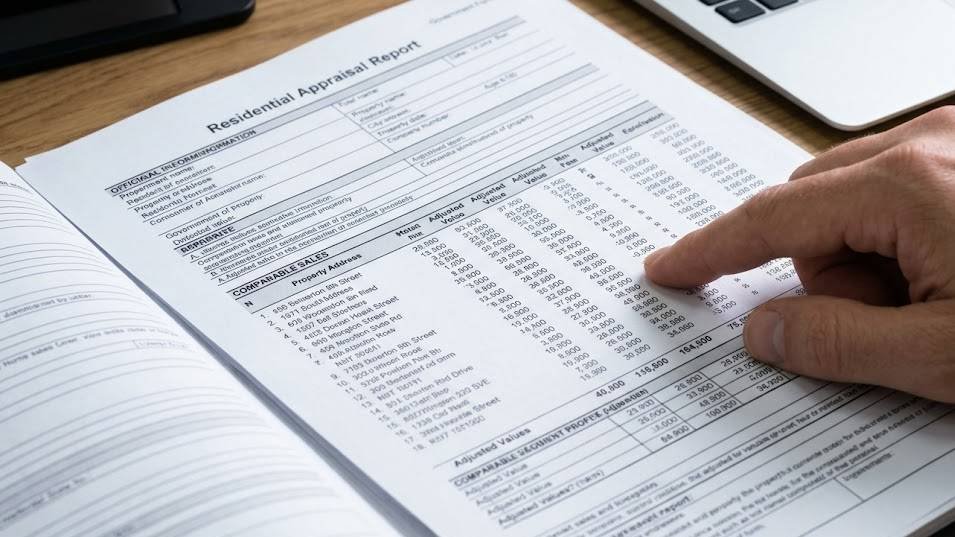
The structural issue is this: HUD’s appraiser oversight is reactive, not predictive. The system is designed to identify and remove bad appraisers after their problematic work has been documented — not to prevent bad appraisals from influencing transactions before they close. HUD does not review individual appraisals prior to loan closing. Under the Direct Endorsement system, lenders — not HUD — underwrite FHA loans and submit appraisals to the agency as part of the insurance application. HUD’s quality control review of appraisals happens post-endorsement, through sampling and complaint-driven review, not front-end screening.
The Government Accountability Office examined this dynamic in its review of HUD’s FHA appraisal oversight process (RCED-99-72), finding that HUD’s monitoring of appraiser performance and its procedures for addressing consumer complaints were areas warranting improvement. The HUD Office of Inspector General has revisited the roster’s accuracy and management processes in subsequent audits, noting in a 2024 review that while HUD’s system controls generally prevented ineligible appraisers from being assigned to new transactions, the removal of ineligible appraisers from the roster was not always timely — meaning that the roster’s historical data could include appraisers with unresolved issues that the system had not yet fully processed.
None of this is catastrophic. The controls exist and, according to the OIG, generally work. But “generally works” and “provides complete protection to buyers before closing” are different standards, and on a market like Long Island’s, the gap between them matters.
Why Long Island’s Market Makes This Harder
Appraisal fraud and inflated valuations are not uniquely Long Island problems. They occur wherever inventory is compressed, competition among buyers is intense, and comparable sales data can be selectively curated to support a higher number. But Long Island’s North Shore and Nassau County present a specific combination of conditions that historically have made inflated comparables easier to construct on paper and harder to immediately challenge.
Consider what a comp-selection process looks like in a market like Mount Sinai or Miller Place, where sales volume is relatively low, properties vary significantly by age and condition even within a small radius, and the difference between a distressed sale and a turnkey sale can represent $80,000 or more. A skilled appraiser — working honestly — navigates those variations carefully, adjusting for condition, lot size, proximity to water, school district quality, and a dozen other factors. The result is a defensible value that reflects what a reasonable buyer would actually pay in arm’s-length conditions.
An appraiser working to hit a pre-determined number — a number suggested by a seller, or by a lender with a stake in the transaction closing — has more latitude on Long Island than they might in a dense urban market with hundreds of nearly identical comparable sales. The pool of comparables is thinner. The adjustments are more subjective. The variance between the most supportable value and the most favorable value is wider. That width is the space in which inflated appraisals live.
What the Public Record Can Tell You
Before you close on an FHA-financed property on Long Island, there are three public-record checks that take no more than an hour and can tell you a great deal about the appraiser assigned to your transaction.
The first is HUD’s FHA Appraiser Roster. Search the appraiser’s name and license number at entp.hud.gov/idapp/html/apprlook.cfm. Confirm they are currently active and eligible. This is a basic step, and it is remarkable how rarely buyers think to take it.
The second is the New York State Department of State Division of Licensing Services disciplinary database, accessible at dos.ny.gov. Search the appraiser’s license number or name for any history of disciplinary action, license suspension, or surrender. The Appraisal Subcommittee’s national registry at asc.gov reports current active disciplinary actions — current revocations, suspensions, and voluntary surrenders in lieu of discipline — for appraisers across all states. Completed disciplinary actions may require a direct inquiry to the state agency.
The third — and this requires slightly more work — is a basic comparison of the appraised value against automated valuation model (AVM) estimates from multiple sources. Zillow’s Zestimate, Realtor.com’s property value tool, and tools like ATTOM Data Solutions publish AVM figures for most residential properties. No AVM is as accurate as a proper appraisal. But if the appraised value on your FHA report is dramatically higher than every available AVM and every recent comparable sale in the area, that divergence is worth questioning. Ask your lender what recourse you have. Ask your attorney whether a field review is appropriate. Know that HUD’s own handbook (4000.1, II.V.A.3.c.ii) requires lenders to order field reviews when a borrower submits a property complaint — though, as documented in post-closing disputes, getting lenders to act on this obligation is not always simple.
The Lender’s Accountability — and the Buyer’s Blind Spot
One element of FHA appraisal governance that most buyers don’t know is that HUD holds lenders accountable for appraisal quality, not just appraisers. A 2004 final rule codified in the Federal Register made clear that lenders who submit appraisals to HUD that do not meet FHA requirements are subject to administrative sanction and civil money penalties by the HUD Mortgagee Review Board. The lender, not HUD, selects the appraiser. The lender certifies to HUD that its underwriter has reviewed the appraisal and that the proposed mortgage complies with HUD requirements. This means the lender has both the responsibility to catch a bad appraisal and the institutional incentive — the desire to close the loan — that can work against catching it.
Buyers occupy a strange position in this structure. They are the people most directly affected by an inflated appraisal — they are the ones who will be underwater if the value corrects — and they are, by design, the least equipped members of the transaction to evaluate it. The appraisal is presented to the buyer as a fait accompli, the work of a credentialed professional operating within a regulated system. Most buyers read the headline number and stop. The underlying comparables, the adjustments, the square footage reconciliations — those are left to the professionals.
I am not suggesting that buyers become appraisers. I am suggesting that buyers treat the appraisal report the way they treat any other document in a transaction of this magnitude: not as a formality, but as a piece of information worth reading carefully. If the number feels wrong — if it is materially higher than everything else you’ve seen about the neighborhood — ask. A real estate attorney who has handled FHA transactions in Nassau and Suffolk can tell you quickly whether the number is in a range they’d expect, and whether the comp selection looks standard. That conversation is worth having before you sign.
What to Do If You’re Already in a Property That Concerns You
If you closed on an FHA-insured property in the past several years and have reason to believe your appraisal was inflated — if your home’s market value has diverged sharply from your purchase price in ways that don’t reflect broader market movement — there are steps available, though they are not always simple.
You can file a complaint with the New York State Department of State Division of Licensing Services against the appraiser, if you have evidence of a deficient appraisal. You can file a complaint with HUD through its FHA complaint process. You can file a complaint with the Consumer Financial Protection Bureau against the lender, if you believe the lender failed in its oversight obligation. Nassau County Supreme Court civil filings are public record; if prior buyers of the same appraiser have pursued litigation, that history may be findable.
What you should understand going in is that proving an appraisal was fraudulent — rather than merely optimistic — is legally difficult. The standard for professional appraisal is judgment, and judgment has a wide range. The licensing board can sanction an appraiser whose work is demonstrably non-compliant; it cannot make a buyer financially whole. That recourse, if it exists at all, lives in civil litigation, which has its own costs and timelines. The practical lesson is that prevention — asking the questions before closing — is significantly less painful than remediation after.
The Market, the System, and What Buyers Can Control
I want to be clear about what I am and am not saying. The FHA appraisal system is not broken. The vast majority of FHA-insured transactions on Long Island involve appraisals that are competent and fair. The regulatory framework — the appraiser roster, the state licensing system, the lender accountability rules, the Mortgagee Review Board — exists and functions, imperfectly but meaningfully. HUD tightened its appraiser roster governance further in early 2026 with Mortgagee Letter 2025-24, which links appraiser eligibility more directly to real-time state license status.
What I am saying is that the system’s monitoring triggers are reactive, that Long Island’s market conditions create more room for inflated comparables than denser markets, and that buyers are the last line of defense against a dynamic they are structurally the least equipped to detect. Knowing the system’s shape — knowing that the roster is searchable, that disciplinary records are public, that AVMs provide a rough benchmark, that lender accountability exists and can be invoked — is the practical protection available to you.
First-time buyers on the North Shore are navigating a market that is genuinely difficult in ways that are well-documented: tight inventory, sustained price pressure, high rates relative to recent history.
The system is not designed against you. But it is not designed to notice, in real time, everything that can go wrong. That is your job, with good counsel around you. And it is manageable — if you know where to look.
This is for informational purposes only — consult a licensed attorney or financial advisor for your specific situation.
Real estate markets change. For current listings and market data, contact Pawli at Maison Pawli.